Introduction
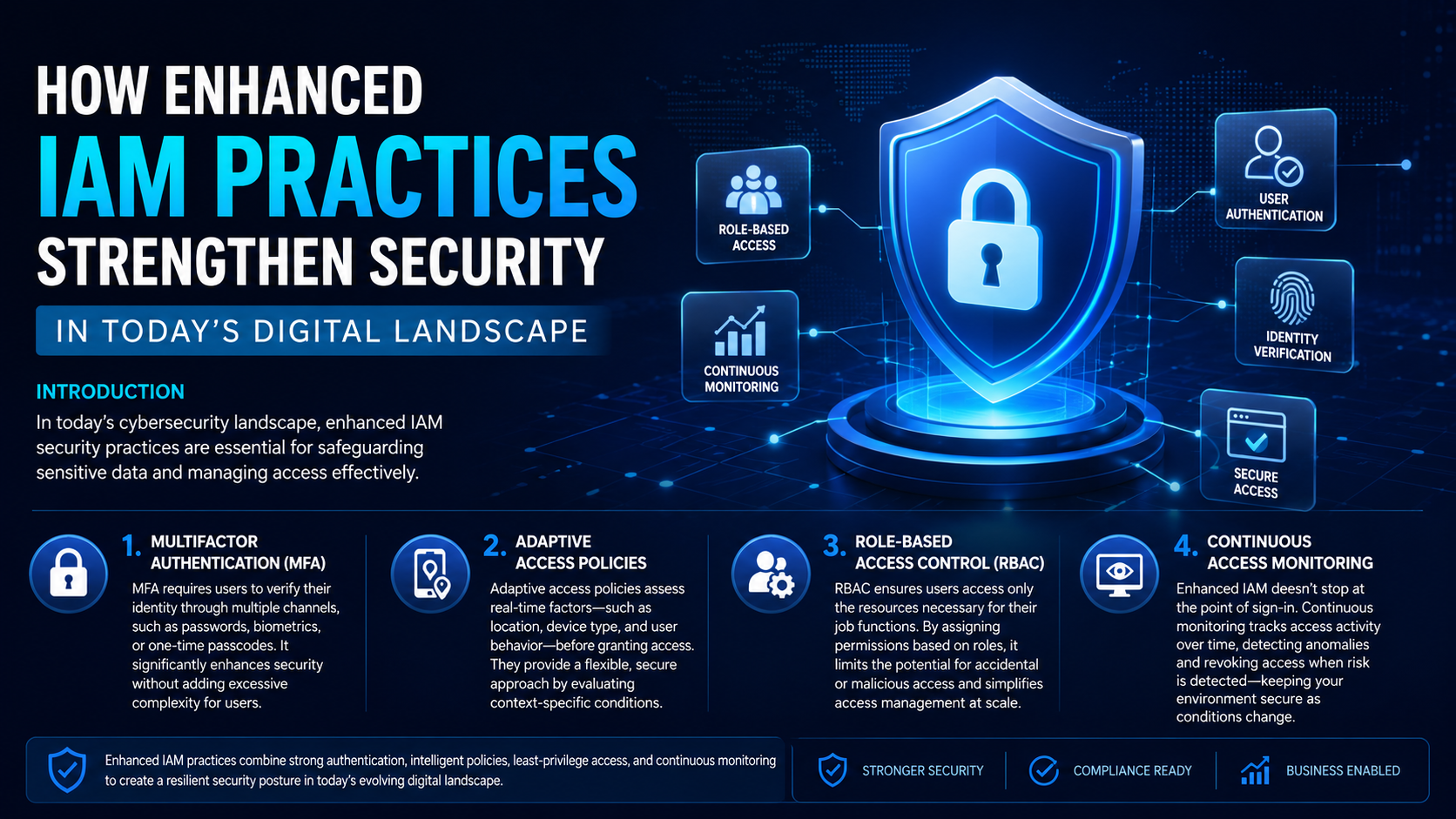
In today's cybersecurity landscape, enhanced IAM security practices are essential for safeguarding sensitive data and managing access effectively.
Why IAM is Essential in Cybersecurity
Identity and Access Management (IAM) is more than just a security tool; it's the first line of defense. IAM solutions manage who has access to what information, ensuring that only authorized users can interact with sensitive data. In an era of distributed workforces and extensive cloud adoption, IAM plays a vital role in preventing unauthorized access. Traditional IAM systems are no longer enough — enhanced IAM practices offer a more comprehensive solution, with features like multifactor authentication, role-based access, and continuous access monitoring.
Key Components of Enhanced IAM
1. Multifactor Authentication (MFA)
One of the most effective methods to secure identity is multifactor authentication (MFA). MFA requires users to verify their identity through multiple channels, such as passwords, biometrics, or one-time passcodes. Even if a malicious actor gains access to one factor (like a password), the additional verification steps reduce the likelihood of unauthorized access. MFA significantly enhances security without adding excessive complexity for users.
2. Adaptive Access Policies
Adaptive access policies are an innovative feature of modern IAM. They assess real-time factors — such as location, device type, and user behavior — before granting access. For example, if a user logs in from an unusual location, the IAM system might trigger additional authentication steps or deny access. By evaluating context-specific conditions, adaptive policies provide a flexible, secure approach to IAM.
3. Role-Based Access Control (RBAC)
Role-Based Access Control (RBAC) ensures users access only the resources necessary for their job functions. By assigning permissions based on roles, RBAC limits the potential for accidental or malicious access to sensitive data and simplifies access management at scale.
4. Continuous Access Monitoring
Enhanced IAM doesn't stop at the point of sign-in. Continuous monitoring tracks access activity over time, detecting anomalies and revoking access when risk is detected — keeping your environment secure as conditions change.