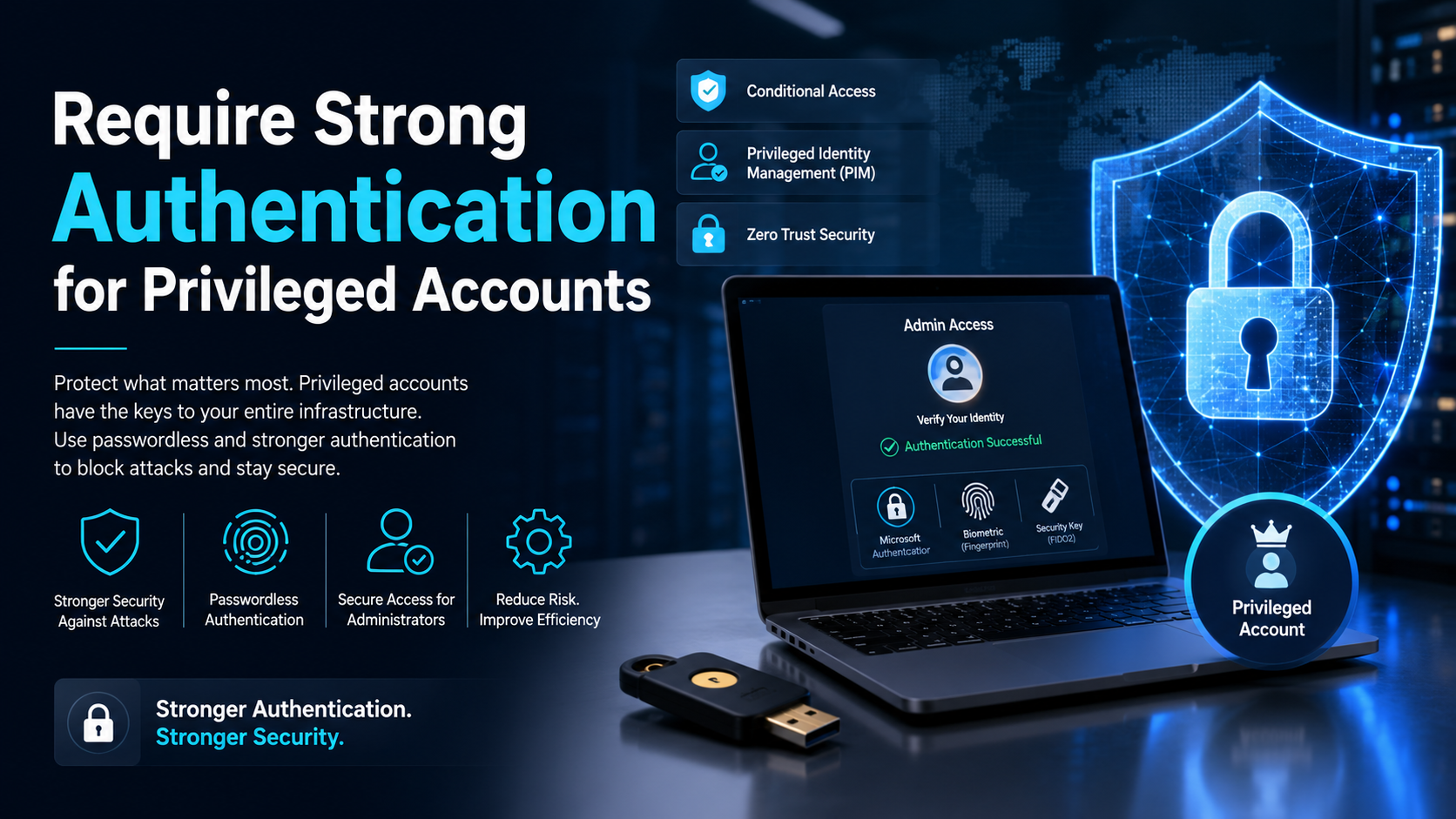
Privileged accounts, such as those with administrative rights, hold elevated permissions that allow users to perform critical actions across an organization's IT infrastructure. Because of this power, they are prime targets for cybercriminals — compromising one can lead to extensive data breaches, unauthorized access, and significant operational disruption. Enforcing passwordless or stronger authentication mechanisms for administrative accounts is therefore essential.
Understanding the Importance of Strong Authentication for Privileged Accounts
Strong authentication ensures that only verified, authorized individuals can access your most sensitive systems. For privileged accounts, weak or reused passwords are simply not acceptable — the stakes are too high.
Common Threats to Privileged Accounts
- Phishing Attacks: Cybercriminals frequently use phishing to deceive users into revealing their credentials.
- Brute Force Attacks: Automated tools can systematically guess passwords using common methods.
- Credential Stuffing: Attackers use stolen credentials from other breaches to gain access.
- Insider Threats: Malicious insiders with access to privileged accounts can cause serious harm.
To counter these threats, it's crucial to implement strong authentication mechanisms that go beyond traditional passwords.
Why Passwords Alone Are Not Enough
Passwords have long been the default authentication method, but they come with serious weaknesses. Even with strict password policies, users often create easily guessable passwords or reuse them across services, creating vulnerability. Additionally, sophisticated attacks such as phishing and credential theft make password-only protection unreliable.
The Limitations of Password-Based Authentication
- Weakness to Guessing: Passwords can be guessed or cracked.
- Phishing Susceptibility: Users can be tricked into revealing passwords through phishing attacks.
- Reusability: Reused passwords mean one breach can compromise multiple accounts.
- Human Error: Weak password habits weaken even the best security policies.
The Case for Passwordless Authentication
Passwordless authentication removes the weakest link — the password itself. Using methods such as biometrics, hardware security keys, and the Microsoft Authenticator app, organizations can dramatically reduce the risk of credential-based attacks while improving the sign-in experience.
Benefits of Passwordless Authentication
- Stronger protection against phishing and credential theft.
- A smoother, faster sign-in experience for administrators.
- Reduced operational overhead from password resets.
For privileged accounts in Azure, combining passwordless sign-in with Conditional Access and Privileged Identity Management (PIM) delivers a robust, defense-in-depth approach.