Introduction
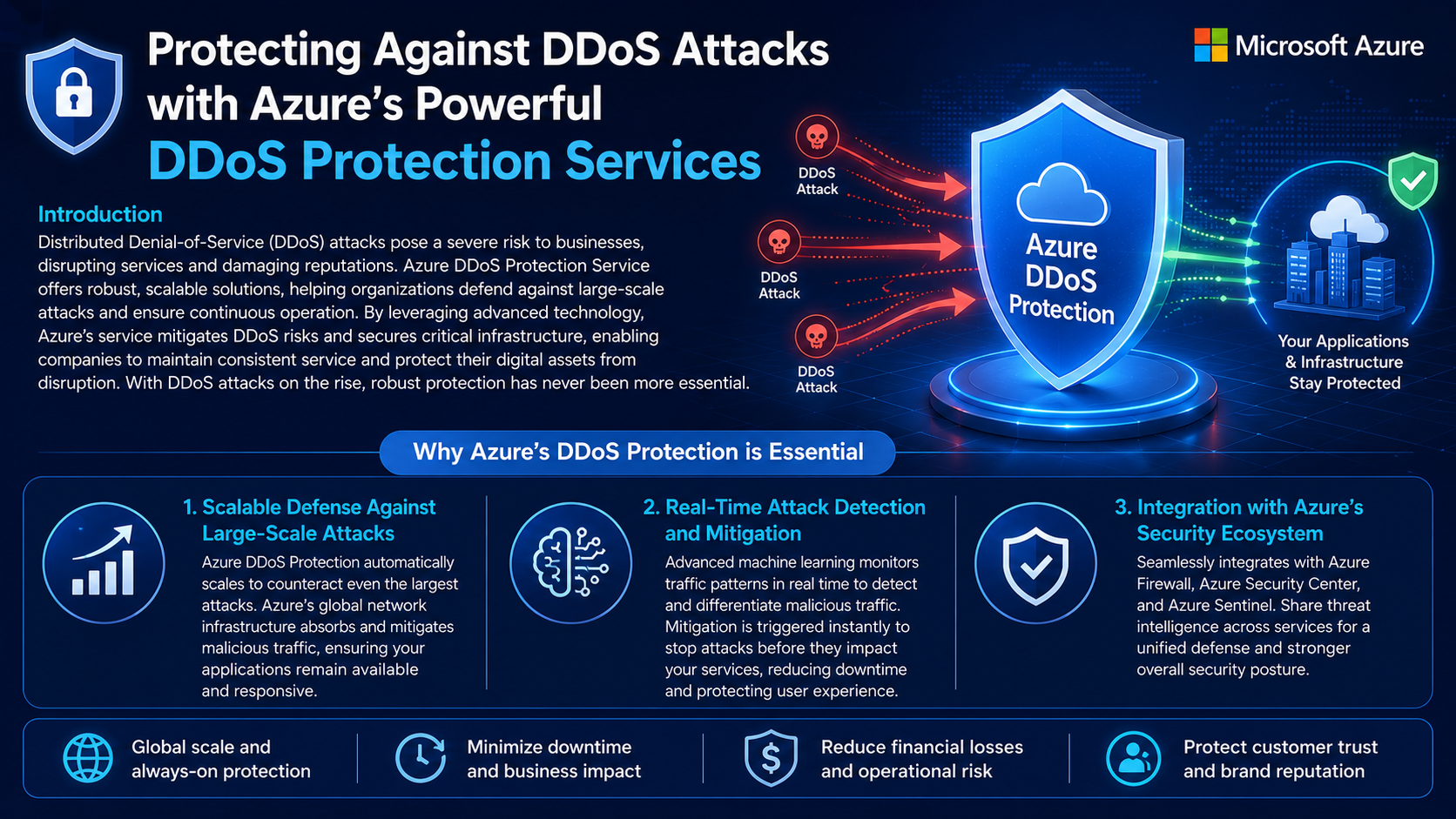
Distributed Denial-of-Service (DDoS) attacks pose a severe risk to businesses, disrupting services and damaging reputations. To combat these threats, Azure DDoS Protection Service offers robust, scalable solutions, helping organizations defend against large-scale attacks and ensure continuous operation. By leveraging advanced technology, Azure's service mitigates DDoS risks and secures critical infrastructure, enabling companies to maintain consistent service and protect their digital assets from disruption. With DDoS attacks on the rise, robust protection has never been more essential.
Why Azure's DDoS Protection is Essential
Scalable Defense Against Large-Scale Attacks
One of Azure's greatest strengths is its ability to scale. Azure DDoS Protection automatically scales to counteract even the largest attacks. Whether targeted by a small or massive attack, Azure's infrastructure adapts to handle the influx without compromising service performance. This scalability is particularly crucial for businesses with global customer bases, as it ensures that users can continue accessing services seamlessly — even during a DDoS attack.
Real-Time Attack Detection and Mitigation
Azure DDoS Protection uses advanced machine learning to monitor traffic patterns in real time. The system distinguishes between legitimate and malicious traffic, allowing it to respond quickly to potential threats. As suspicious activity is detected, Azure's algorithms activate mitigation measures immediately, preventing damage before it occurs. By leveraging machine learning, Azure's DDoS Protection continually improves its accuracy in identifying and mitigating attacks. This proactive approach helps companies reduce downtime, minimize financial losses, and safeguard customer trust.
Integration with Azure's Security Ecosystem
Azure DDoS Protection is seamlessly integrated with Azure's comprehensive security suite, including Azure Firewall, Azure Security Center, and Azure Sentinel. This integration enables a unified defense strategy, where information about threats is shared across services to strengthen your overall security posture.